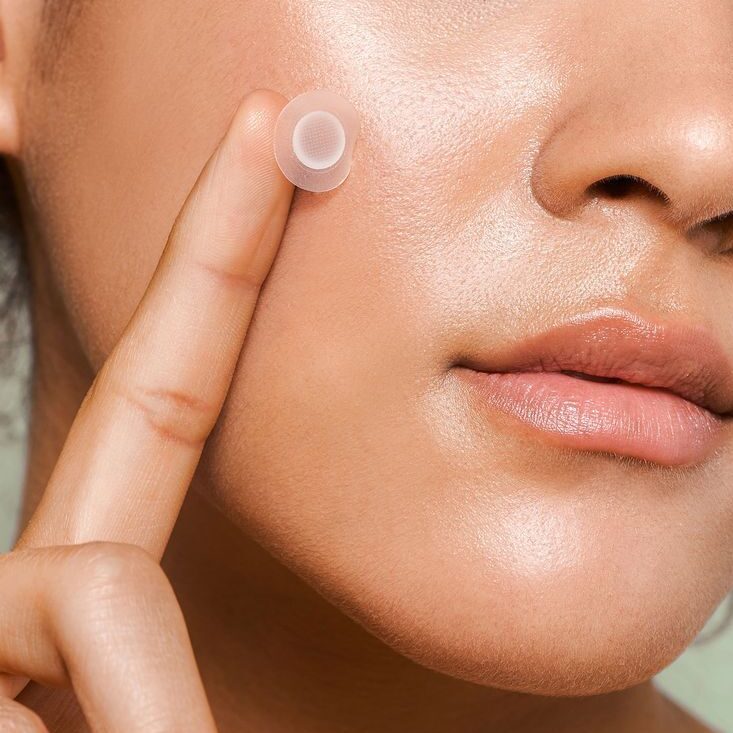
Hydrocolloid patches work through moist wound healing and osmotic capillary uptake, deploying hydrophilic polymers like sodium carboxymethyl cellulose to extract exudate, pus, and excess lipids while sealing open blemishes against outside contaminants. According to epidemiological dermatological data published by the American Academy of Dermatology (AAD), acne affects up to 50 million Americans annually, with over 80% of individuals experiencing breakouts between ages 11 and 30. Understanding the physical fluid dynamics, material manufacturing, and skin biology of hydrocolloid dressings is essential for determining when and how to deploy them for optimal epidermal recovery.
Table of Contents
- 1. What Is Hydrocolloid? Material Structure & Polymer Matrix
- 2. The 4-Step Mechanism: How Hydrocolloid Draws Out Fluid & Heals
- 3. Decoding the “White Bubble”: Impurities vs. Hydrated Matrix
- 4. Clinical Matching: Pustules, Whiteheads vs. Cystic Lesions
- 5. Application Protocol: Ensuring Maximum Tack & Removal Safety
- 6. Holistic Care: Active Ingredients & Prevention Strategies
- 7. Conclusion: The Real Role of Hydrocolloid in Blemish Recovery
1. What Is Hydrocolloid? Material Structure & Polymer Matrix
Originally developed in clinical wound care for surgical ulcers, burns, and blister management, a hydrocolloid dressing is a moisture-retentive, semi-occlusive medical matrix. From a polymer engineering perspective, these dressings consist of two primary functional layers:
- Internal Hydrophilic Gel Phase: A combination of cross-linked gel-forming agents—predominantly sodium carboxymethyl cellulose, gelatin, and pectin—dispersed within adhesive elastomers like polyisobutylene.
- External Vapor-Permeable Backing: A polyurethane film or thin cellular foam sheet that regulates moisture vapor transmission rates (MVTR) while repelling external water, airborne dirt, and microbes.
FAQ: Can hydrocolloid bandages be used on infected wounds?
No. Hydrocolloid dressings should not be applied to actively spreading clinical infections or deep anaerobic wounds. They are strictly engineered for uninfected, low-to-moderate exudative lesions, minor burns, superficial scrapes, and draining blemishes.
2. The 4-Step Mechanism: How Hydrocolloid Draws Out Fluid & Heals
When placed over a blemish, hydrocolloid follows a clear four-stage physiochemical reaction cycle that manages fluid dynamics and accelerates healing without drying out the surrounding stratum corneum:
| Step | Action Phase | Biomechanical Process |
|---|---|---|
| Step 1 | Thermal Activation | The ambient warmth of your skin softens the adhesive polymer lining, allowing the dressing to conform to micro-creases in the skin. |
| Step 2 | Capillary Fluid Absorption | Hydrophilic particles exert capillary draw, sucking excess oil, pus, and inflammatory discharge upward from the blemish. |
| Step 3 | Gel Bubble Formation | Absorbed moisture turns the internal dry polymers into an expanded, opaque white gel bubble, locking impurities away from the skin. |
| Step 4 | Occlusive Protection | The outer barrier maintains a moist healing environment, supports natural skin enzymes, and stops fingernail picking or trauma. |
3. Decoding the “White Bubble”: Impurities vs. Hydrated Matrix
A common misconception in consumer skincare is that the opaque white dome visible after wearing a patch is pure blemish pus or trapped dirt. In reality, this is a physical swelling reaction.
When the sodium carboxymethyl cellulose particles contact exudate and interstitial fluid, they bind water molecules and transition from a solid adhesive state into a cohesive hydrogel. While it captures inflammatory fluid and cellular debris, the visible white volume is primarily the hydrated dressing material itself reaching fluid strike-through capacity.
FAQ: Can I use a hydrocolloid patch on a pimple I’ve already popped?
Yes. While popping is never recommended, applying a hydrocolloid patch over an open, popped pimple absorbs weeping fluids, prevents hard scab formation, and creates a sterile barrier that significantly reduces bacterial reinfection and scar formation.
4. Clinical Matching: Pustules, Whiteheads vs. Cystic Lesions
Because hydrocolloid relies on physical fluid absorption and surface contact, its therapeutic efficacy depends on the lesion type and follicular depth:
| Blemish Classification | Physical Characteristics | Patch Performance | Recommended Action |
|---|---|---|---|
| Whiteheads & Pustules | Surface pus visible at center; fluid close to the epidermis | Optimal / Highly Effective | Apply standard hydrocolloid overnight to draw out fluid and flatten the blemish. |
| Open / Popped Lesions | Ruptured skin surface with active inflammatory drainage | Optimal / Protective | Seals raw tissue, speeds re-epithelialization, and prevents scarring. |
| Early Inflamed Papules | Red, tender bumps lacking an accessible fluid head | Moderate (Medicated) | Use medicated or microneedle patches infused with tea tree oil or succinic acid. |
| Deep Nodular / Cystic Acne | Painful subcutaneous lesions located deep within dermis | Low / Ineffective | Requires microcrystal delivery systems, topical retinoids, or clinical evaluation. |
| Blackheads (Open Comedones) | Solid plugs of oxidized keratin and hardened sebum | Ineffective | Requires chemical exfoliants (salicylic acid / BHA) rather than moisture absorption. |
5. Application Protocol: Ensuring Maximum Tack & Removal Safety
To ensure pressure-sensitive hydrocolloid adhesives bond securely without sliding or tearing sensitive skin, follow this precise application and removal process:
- Cleanse the Target Site: Wash the area thoroughly with a mild cleanser to remove surface oils, dead skin cells, and cosmetics.
- Dry Completely: Ensure the skin is 100% dry. Any residual moisture, toner, or serum will weaken the adhesive boundary and cause edge peeling.
- Apply Directly to Bare Skin: Place the patch sticky-side down centered over the blemish before applying moisturizers or facial oils.
- Press & Secure: Press down firmly for 5 to 10 seconds. Skin warmth helps soften the hydrocolloid for continuous contact.
- Wear Time: Leave in place for 6 to 12 hours (or overnight) until the patch turns completely white and opaque.
- Safe Removal Technique: Do not pull the patch straight upward. Gently loosen one edge and stretch it parallel along the skin surface to release the adhesive seal without irritating the blemish.
FAQ: Can hydrocolloid bandages worsen my acne?
Hydrocolloid patches do not inherently clog pores or worsen acne. However, applying a patch over dirty, unwashed skin can trap bacteria, and individuals with adhesive allergies may experience localized skin redness.
6. Holistic Care: Active Ingredients & Prevention Strategies
While standard hydrocolloids provide physical absorption, modern advanced patches integrate therapeutic actives to target specific breakout stages, from early formation to post-blemish recovery:
- Early-Stage Interventions: Patches infused with tea tree oil (Melaleuca alternifolia) and succinic acid help soothe underlying inflammation before a whitehead forms.
- Post-Blemish Tone Repair: Formulations featuring Niacinamide, Ascorbic Acid (Vitamin C), and Ferulic Acid help fade post-inflammatory dark marks and promote an even skin tone.
- Full-Face Preventative Regimen: Hydrocolloids are spot treatments and do not prevent future breakouts. Pair them with leave-on salicylic acid (BHA), adapalene, or benzoyl peroxide to keep pores clear across the entire face.
7. Conclusion: The Real Role of Hydrocolloid in Blemish Recovery
Hydrocolloid patches offer an effective, science-backed approach to managing acute, exudative blemishes. By drawing out excess fluid, maintaining a balanced moist environment, and forming an occlusive shield against picking and bacteria, they accelerate healing and reduce the risk of visible post-blemish marks.
However, hydrocolloid technology is a targeted spot solution rather than a comprehensive acne cure. For systemic, deep cystic breakouts or preventative pore maintenance, pair these patches with targeted active ingredients, consistent cleansing, and guidance from a board-certified dermatologist.
Industry References & Data Sources:
- American Academy of Dermatology: Skin Conditions by the Numbers (Acne Prevalence)
- Wikipedia: Hydrocolloid Dressing Polymer Science & Wound Care
- Wikipedia: Sodium Carboxymethyl Cellulose Chemical Structure
- Wikipedia: Polyisobutylene Pressure-Sensitive Polymers